8 min read
Recovery After a Tummy Tuck (Abdominoplasty): Week by Week
Compression garment, drains, sleeping position, returning to work and exercise: a realistic account of abdominoplasty recovery, from the first week to the sixth month.
By Dr. Achraf Daoud · Published on · Updated on
Recovery after an abdominoplasty (tummy tuck) takes on average 2 to 3 weeks before you can resume daily life and office work, and 6 to 8 weeks before you return to exercise. The scar itself continues to mature for 12 to 18 months. These timeframes are average guides: they vary with the extent of the surgery, your general health and the way you heal.
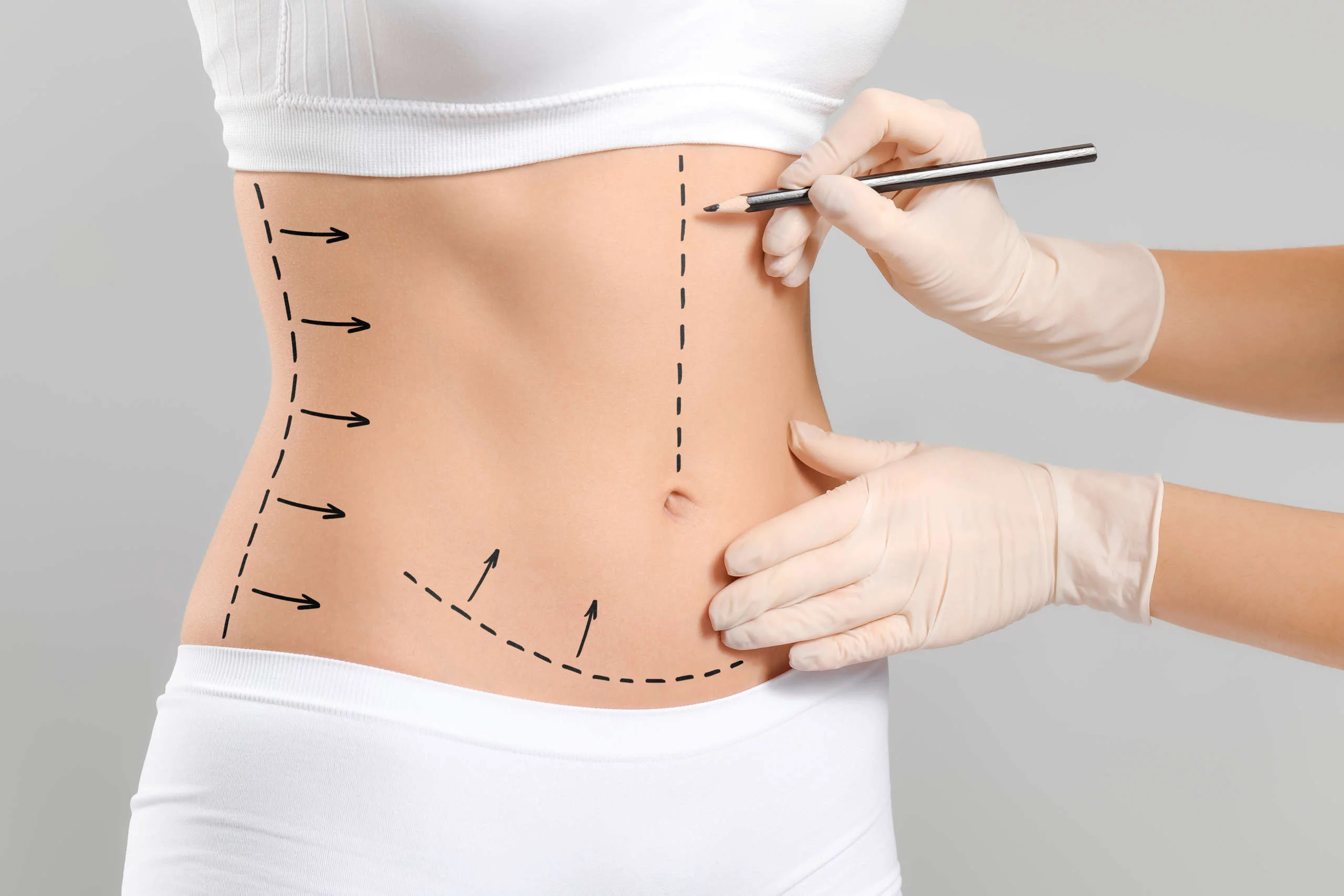
Abdominoplasty removes excess skin and fat from the lower abdomen and, most often, tightens the separated rectus muscles (diastasis). It is major surgery under general anaesthesia, which is neither painless nor free of risk. It is only considered after a consultation and a medical examination, and the quote is only drawn up afterwards.
Here, week by week, is what is generally observed, what to do and what to avoid.
The recovery timeline
| Period | What you may notice | What is allowed |
|---|---|---|
| Days 1 to 3 | Pain relieved by medication, tightness, drains in place, stooped posture | Early assisted mobilisation, very slow walking around the room |
| Week 1 | Oedema, bruising, tiredness, drains removed depending on output | Gentle walking, rest, garment worn at all times |
| Weeks 2 to 3 | Pain easing, gradually standing straighter | Return to office work, driving once off strong painkillers |
| Weeks 4 to 6 | Persistent oedema, tenderness, itching | Longer walks, light activities, garment by day |
| Weeks 6 to 8 | Softer tissues, pink scar | Gradual return to exercise, once cleared |
| Month 3 | Markedly improved appearance, area still numb | Full exercise in general, abdominal exercises on advice |
| Month 6 and beyond | Residual oedema fading, scar maturing | Normal activity, scar care, sun protection |
The first week: drains, pain and posture
The first days are the most demanding. You leave theatre with a dressing, a compression garment and, depending on the technique, one or two drains that remove the fluid that collects under the skin. Drains are removed once the output becomes low, often between the third and seventh day, sometimes later.
At first you will be slightly bent forward: the skin is tight and it is normal not to be able to stand fully upright. Standing straight returns gradually over one to two weeks. To sleep, a semi-seated position, with your back raised and knees bent over a cushion, eases tension on the scar. Sleeping on your stomach should be avoided.
Walk as soon as the team allows, a few minutes several times a day. This early mobilisation is a cornerstone of thrombosis prevention. Do not lift anything heavy and do not strain your abdominal muscles.
The compression garment: how long to wear it
The garment limits oedema, supports the tissues and reduces the risk of fluid collection. It is generally worn day and night for the first few weeks, then by day only until six to eight weeks, sometimes longer according to the surgeon's instructions.
- It should be firm without restricting your breathing or causing pain or numbness in the legs.
- A garment that is too tight or that rolls can mark the skin: tell us if this happens.
- Do not stop wearing it on your own initiative, even if you feel well.
Walking, driving, work and exercise
Walking and daily life
Walking is encouraged from the first day, with distances gradually increasing. Stairs are possible but slow. Lifting (shopping, a young child) should be avoided for about a month to six weeks.
Driving and returning to work
To drive, you must no longer be taking sedating painkillers and be able to brake without pain or fear of pulling on the scar: on average two to three weeks. Office work is generally resumed after two to three weeks, and physical work after six to eight weeks, according to the surgeon's advice.
Exercise after a tummy tuck
Brisk walking and light stationary cycling can resume around the sixth week, once cleared. Running, weight training and exercises that work the abdominal muscles are generally deferred to three months, or longer if a diastasis was repaired. Resuming too early risks the scar opening, a fluid collection or a loosening of the result.
The scar: 12 to 18 months to mature
The abdominoplasty scar is horizontal, placed as low as possible so that it stays hidden under underwear or a swimsuit, with a further scar around the navel. It is red and raised for the first few months, then gradually softens, fades and flattens. Full maturation takes 12 to 18 months.
A scar never disappears. Its quality depends on your skin, the tension, your genetics and sun protection. Some people develop a thickened, hypertrophic or keloid scar, which needs specific treatment. Gentle massage once healed, silicone dressings and strict sun protection are generally recommended.
Swelling, numbness and sensation
Swelling is the rule. It peaks in the first week, then subsides, but some persists for several months, particularly at the end of the day. It is more marked in the lower abdomen and can make the result seem disappointing at the sixth week, when the progress is in fact normal.
Numbness of the abdominal skin is common: the skin has been lifted and some small sensory nerves are divided. Sensation generally returns over several months, sometimes only partially. Tingling or mild shooting sensations are possible.
Repair of the diastasis
Diastasis of the rectus muscles, common after pregnancy or significant weight gain, is a separation of the muscles of the abdominal wall. It is repaired during the abdominoplasty by bringing the muscles together with sutures. This step tightens the waist from within, but it also makes recovery more painful and calls for a more cautious return to exertion.
The repair is not always permanent: a later pregnancy, major weight gain or exertion that comes too early can weaken it. This is one of the reasons why the procedure is not advised if you still wish to have children.
The risks and complications to be aware of
- Seroma: a fluid collection under the skin, the most common complication. It is treated by aspiration, sometimes by drainage.
- Haematoma: a collection of blood that may require a return to theatre.
- Delayed healing: mainly at the centre of the scar, more common in smokers, people with diabetes or people who are overweight. Skin necrosis is possible.
- Wound infection, treated with antibiotics or local care.
- Deep vein thrombosis and pulmonary embolism: rare but serious.
- Widened or thickened scar, asymmetry, irregularities that sometimes need a touch-up.
Thrombosis prevention relies on early mobilisation, compression, good hydration and, depending on your profile, a preventive dose of anticoagulant. A painful calf, sudden breathlessness or chest pain are emergencies. Stopping smoking for several weeks before and after surgery significantly reduces healing problems.
Recovering in Tunisia: how long to stay
For an abdominoplasty performed in Tunis on an overseas patient, a stay of 8 to 10 days is generally advised, longer if the procedure is combined with another: two nights in clinic, removal of the drains, the first healing checks, then the fit-to-fly check. The surgeon confirms when you can travel. Follow-up then continues remotely.
Frequently asked questions
How long does recovery from a tummy tuck take?
On average, it takes 2 to 3 weeks to resume daily life and office work, and 6 to 8 weeks for more physical activities. Oedema and the scar continue to change for several months.
How long do I need to wear a compression garment after a tummy tuck?
Generally day and night for the first few weeks, then by day only until 6 to 8 weeks. The exact duration is set by the surgeon according to how you progress.
When can I exercise again after a tummy tuck?
Brisk walking resumes around the sixth week once cleared, with more intense exercise and abdominal work around the third month or later. Resuming too early risks healing complications.
Is the tummy tuck scar visible?
It is placed low so that underwear hides it, but it never disappears. It matures over 12 to 18 months and its appearance varies from one person to another.
Can I sleep on my stomach after a tummy tuck?
No, not in the first few weeks. It is advised to sleep with your back raised and knees bent to limit tension on the scar. The surgeon will tell you when lying on your stomach is possible again.