
7 min read
Deep Plane Facelift: The Next-Generation Face and Neck Lift
The deep plane releases the retaining ligaments and repositions the SMAS as a single unit. What this technique really changes, for whom, and with what risks.
By Dr. Achraf Daoud · Published on · Updated on
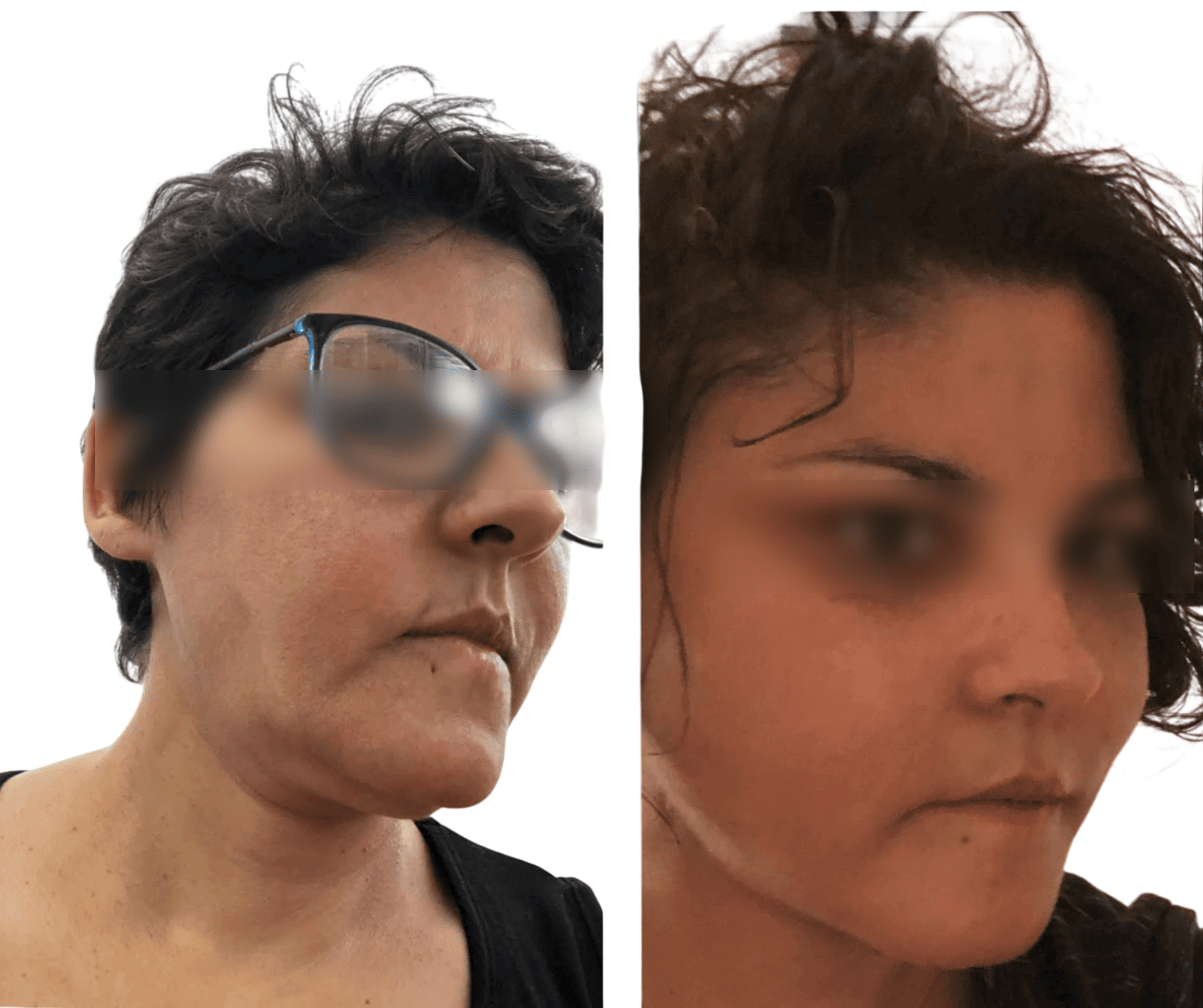
The deep plane facelift is a face and neck lift technique that releases the retaining ligaments of the face and repositions the SMAS (the superficial musculo-aponeurotic system) together with the skin as a single unit, known as a composite flap. Unlike a skin-only lift or a conventional SMAS facelift, it works on the middle third of the face and the nasolabial folds, which simply pulling on the skin does not correct.
It is not a ‘stronger’ facelift: it is an anatomically different procedure, which demands precise training and carries a specific risk, injury to the facial nerve. It requires a consultation, a medical examination and an honest discussion of the alternatives. The quote comes only afterwards. No result can be guaranteed.
Here is what this technique really is, who it suits, what you can expect from it and what you should be wary of.
Understanding the anatomy: skin, SMAS and ligaments
The face is made up of several layers: the skin, the subcutaneous fat, then the SMAS, a fibromuscular network that links the muscles of expression and transmits their movements to the skin. Beneath the SMAS run the branches of the facial nerve. Retaining ligaments anchor these layers to the bone and stop the skin from sliding.
With age, these ligaments stretch, fat descends, the volume of the middle third sags, and the nasolabial folds, jowls and jawline deepen. The laxity is therefore deep before it is cutaneous.
Skin-only facelift, conventional SMAS facelift and deep plane
| Technique | What is treated | Limitations |
|---|---|---|
| Skin-only facelift | Pulls the skin | Short-lived result, pulled look, does not act on the middle third |
| Conventional SMAS facelift | Plication or partial removal of the SMAS, then traction of the skin | Moderate effect on the middle third and nasolabial folds |
| Deep plane | Release of the ligaments and mobilisation of the SMAS and skin as a single unit | More demanding technique, specific risk to the facial nerve |
In a conventional SMAS facelift, the SMAS is folded or tightened, but it remains attached by its ligaments, which limits what can be repositioned. In the deep plane, the dissection passes beneath the SMAS, detaches the ligaments and moves the whole, skin included, more freely. The traction is applied on a deep plane rather than on the skin, which avoids the pulled look.
Why the deep plane acts on the middle third
The middle third of the face, that is the cheekbones and nasolabial folds, is held by strong ligaments. As long as they are not released, lifting the skin is not enough to reposition the deeper tissues. The deep plane releases these ligaments, which allows the middle third to be lifted and the nasolabial fold to be softened more naturally than by pulling on the skin.
It softens; it does not remove. A nasolabial fold is a normal structure of the face, and the aim is never to erase it but to soften its depth.
The ideal candidate and age
The deep plane is generally aimed at people from their late forties to their sixties, or beyond, with laxity of the middle third, jowls and a blurred jawline, and skin of sufficient quality. There is no fixed age: it is the examination that counts.
- Moderate to marked laxity of the middle third, neck and jaw.
- Good general health, with no uncontrolled illness; a non-smoker or someone who has stopped for a prolonged period.
- Realistic expectations: to look refreshed, not to change your face.
- An understanding of the recovery time and the risks.
It is often combined with other procedures: blepharoplasty, temporal lift, facial fat grafting to restore volume, or skin resurfacing. Each combination lengthens the anaesthetic and must be discussed.
Where the scars are placed
The incisions are placed in the natural creases and within the hair-bearing area: in front of the ear or in its fold, then behind the ear and in the temporal scalp. They are generally discreet, but never invisible. Their quality varies with the skin, the tension and healing.
The procedure and recovery
The operation is carried out under general anaesthesia, or sometimes under deep sedation, and generally lasts three to five hours. It requires one or two nights of monitoring in clinic. A light bandage is applied and a drain may be placed.
- First days: swelling, bruising, facial tightness, a sensation of numbness. Head raised for sleeping.
- Days 7 to 10: removal of stitches or staples as appropriate, bruising turning yellow, wound healing check.
- Weeks 2 to 3: gradual return to social life, with corrective make-up possible. Some residual oedema persists.
- Weeks 4 to 6: return to light physical activity, then to exercise according to the surgeon's advice.
- Months 3 to 6: oedema fades, scars soften, sensation largely returns.
For a stay in Tunisia, 8 to 10 days is generally planned, and the return flight is only permitted after the end-of-stay check-up. The final result is judged after several months.
How long the results last: 10 to 15 years, but ageing continues
A facelift repositions tissues; it does not stop ageing. On average, the benefit is estimated to remain visible for 10 to 15 years, with wide variability depending on skin quality, smoking, sun exposure, weight changes and genetics. You will always be the age you are, but your face will have been set back a number of years compared with its natural course.
The risks of the deep plane
- Facial nerve injury: most often a temporary disturbance of movement, which recovers over weeks or months. Lasting damage is rare but possible.
- Haematoma: a collection of blood that may require a prompt return to theatre; more common with uncontrolled high blood pressure.
- Asymmetry, contour irregularities, widened scars.
- Change to the hairline, hair loss around the scars, displacement of the sideburns.
- Delayed healing, skin necrosis (especially in smokers), infection.
- Skin numbness, sometimes prolonged, particularly near the ear.
- Risks linked to general anaesthesia, and venous thrombosis.
A technique that demands specific training
The deep plane is not a facelift to which force is simply added. It demands a detailed knowledge of facial anatomy, of the points where the facial nerve passes, and dedicated training, with a significant number of supervised cases. Ask the surgeon how she trained, how many procedures of this type she performs and what alternatives she suggests. A simpler alternative is sometimes more appropriate.
Preparing for the procedure
Before a facelift, you are generally asked to stop smoking for several weeks, to suspend certain medication or supplements that promote bleeding, and to have your blood pressure brought under control. Arrange for someone to accompany you during the first few days.
Frequently asked questions
What is the difference between a SMAS facelift and a deep plane facelift?
In a conventional SMAS facelift, the SMAS is tightened or folded but remains attached by its ligaments. In the deep plane, these ligaments are released and the SMAS is moved together with the skin as a single unit, which acts better on the middle third of the face.
How long does a deep plane facelift last?
On average, the effects remain visible for 10 to 15 years, with wide individual variability. A facelift does not stop ageing: the face continues to change.
At what age should I have a deep plane facelift?
There is no fixed ideal age. It is most often offered from the late forties or in the fifties, in cases of laxity of the middle third and neck, after an assessment of the skin and general health.
What are the risks of a deep plane facelift?
The specific risk is injury to the facial nerve, most often temporary. Others include haematoma, asymmetry, a change to the hairline, delayed healing and the risks of general anaesthesia.